School profile Verified 2 June 2026

Reading Reading 11+

Reading School

Erleigh Road, Reading, RG1 5LW

A selective boys grammar school in Reading, Berkshire, serving ages 11-18 with a sixth form and around 1,129 pupils on roll.

Boys Academy converter Ages 11-18 Sixth form FSCE
UK rank
UK Rank #9
Year 7 places
138
Competition i
7.2 candidates per place
Ofsted
Outstanding
11+ route
FSCE
Compare Official website Map

At a glance

Key facts

GCSE rank
UK Rank #9
Admissions
Boys only
Assessment
FSCE
Places in Year 7
138
Competition i
7.2 candidates per place
Catchment
Catchment is used as an oversubscription priority for day places. Eligible day applicants living in the published postcode catchment are considered before eligible non-catchment day applicants, after the higher-priority care, premium, social/welfare and sporting-aptitude categories.
Ofsted
Outstanding

Overview

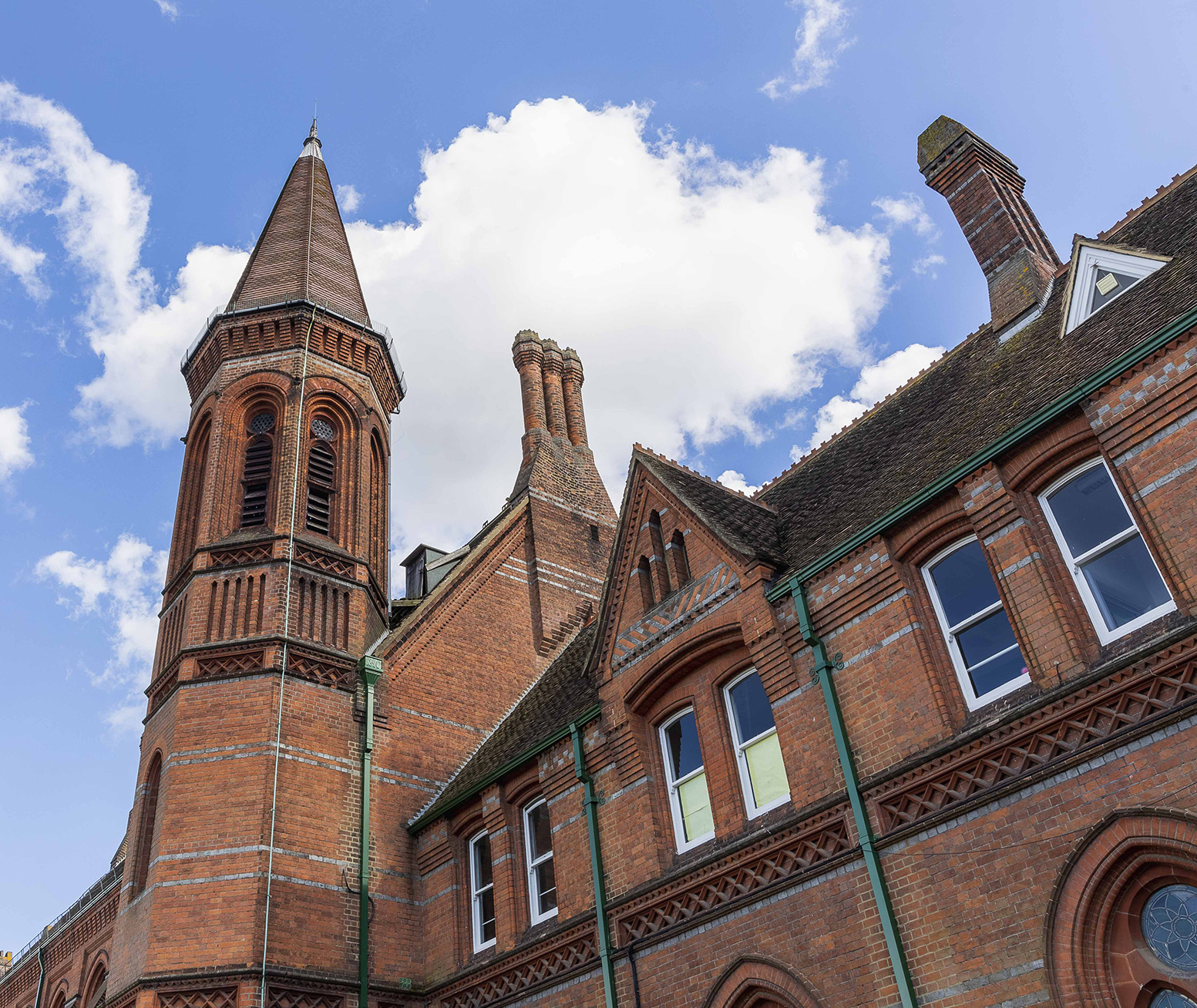
Reading School is a selective boys' day and boarding grammar school in Berkshire, educating about 1,129 pupils from 11 to 18. Few state schools have a history as deep: the school traces its foundation to 1125 and marked its 900th anniversary with the same emphasis it places on modern school life - scholarship, service and social impact.

The official values are excellence, integrity, leadership and community, and they sit inside the school's distinctive curriculum language, The Reading Way. The aim is not just examination success, though the outcomes are very strong, but a broader formation through intellectual, sporting, artistic and cultural life. Public outcomes are strong: Outstanding Ofsted, 100% grade 5+ in English and maths, and 62.9% AAB or better at A level.

Boarding makes Reading different from most grammar schools. Weekly and sixth-form boarding give students access to boarding houses, senior kitchens, common rooms and wider site facilities, while school life also includes music, drama, sport, student leadership and enrichment. The sixth form takes a substantial number of new students, so Year 12 is not simply a continuation of the lower school.

Year 7 entry has 138 places and uses English and mathematics assessment with age-standardised scoring. Families also need to pay close attention to the school's designated-area and admissions-policy evidence, because sitting the entrance process is only one part of the application. The latest applications record lists 448 applications and 146 offers, making the published admissions details important in practice.
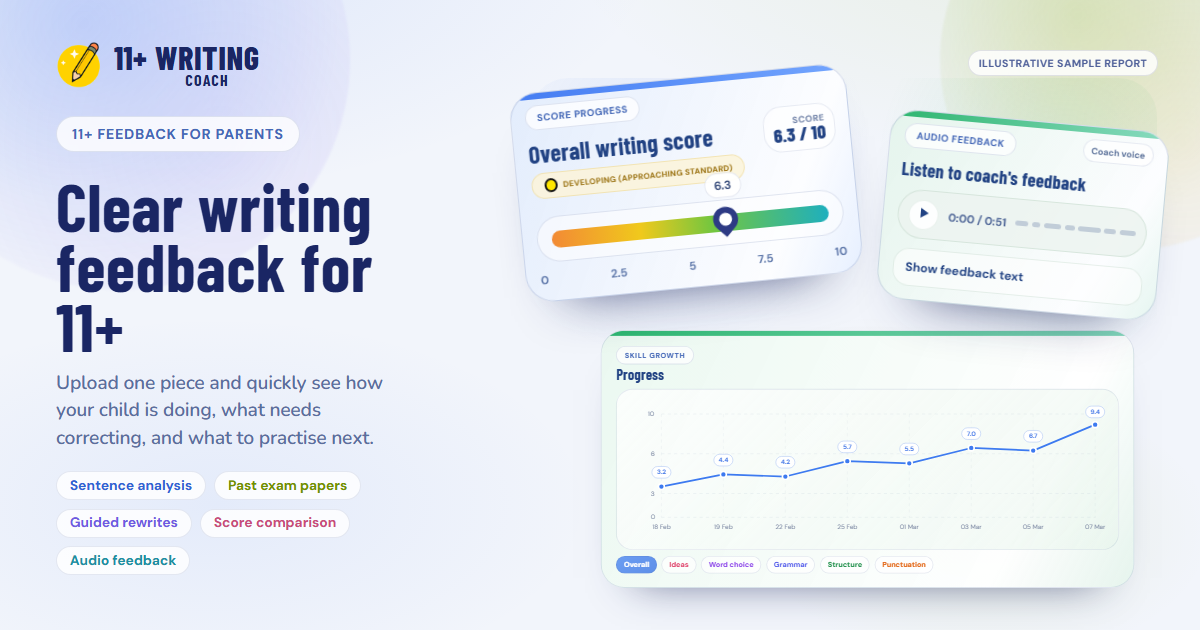
11 Plus Writing Coach preview showing creative writing feedback cards and score summaries
Preview from 11 Plus Writing Coach

Creative writing is tested in this school's current 11+ assessment.

Need help with 11+ creative writing?

A weak creative writing piece can leave a child short of qualification. 11 Plus Writing Coach helps families build steadier practice and clearer feedback.

From our 11 Plus Writing Coach site

Key points

Assessment route
FSCE across a 4-stage process, covering English, Maths, Other and Writing task.
Places and demand
138 places in Year 7 and 7.2 candidates per place
Catchment
Catchment is used as an oversubscription priority for day places. Eligible day applicants living in the published postcode catchment are considered before eligible non-catchment day applicants, after the higher-priority care, premium, social/welfare and sporting-aptitude categories.
Results
100% grade 5+ in English and maths and 83 Attainment 8
Sixth form
Sixth form available with 62.9% AAB or better and 84% in higher education.

GCSE benchmark

Latest 2024/25 KS4 measures compared with Reading and England.

School Local authority England
GCSE benchmark comparison Latest GCSE benchmark measures for Reading School, Reading, and England. 0 50 100 Att. 8 5+ E&M EBacc APS EBacc %
Attainment 8
83
Grade 5+ English and maths
100%
EBacc APS
8.25
EBacc entry
97.3%

Attainment 8 trend

Recent published Attainment 8 scores compared with Reading and England.

School Local authority England
Attainment 8 trend line Attainment 8 over time for Reading School, Reading, and England. 100 80 60 40 21/22 22/23 23/24 24/25

Destinations

Latest 2024/25 Year 11 destination mix compared with Reading and England.

Education Apprenticeships Employment Other / unknown
Destinations stacked bar comparison Year 11 destinations for Reading School, Reading, and England across education, apprenticeships, employment, and other or unknown destinations. 0 50 100 School Local auth. England

School details

School type
Academy converter
Admissions
Boys only
Age range
11-18
Headmaster
Revd Dr Chris Evans
Pupil roll
1,129 pupils
Sixth form
Yes
Boarding
Boarding school
Trust
Reading School
FSM i
4.5%
EAL i
19.4%
EHCP i
0.7%

Facilities

Theatre

Extracurriculars

Drama

Ethnicity

January 2025 school census

Pupil ethnicity

Whole-school roll of 1,129 pupils; 1,125 had a recorded ethnic group.

White 19.7% Asian 65.1% Mixed 9.5% Black 3.5% Other 1.9% Unclassified 0.4%
Recorded group Share Category Pupils
Indian Asian 508
White British White 173
Chinese Asian 90
Pakistani Asian 70
Any other Asian background Asian 60
Any other mixed background Mixed 51
White and Asian Mixed 51
Any other White background White 49
African Black 35
Any other ethnic group Other 21
Bangladeshi Asian 7
Unclassified Unclassified 4
White and Black Caribbean Mixed 3
Any other Black background Black 2
Caribbean Black 2
White and Black African Mixed 2
Irish White 1

Location and contact

Address

Address
Erleigh Road, Reading, Berkshire
Postcode
RG1 5LW
Exam area
Reading 11+

School leadership

Headmaster
Revd Dr Chris Evans

School contact

School phone
01189015600

Admissions contact

Admissions team
admissions office
Admissions phone
01189015600

Admissions

Year 7 places
138 places (2026 entry)
Applications listed
448 applications (2025 entry)
First preferences
360 first preferences (2025 entry)
Competition i
7.2 candidates per place
Catchment picture
Catchment is used as an oversubscription priority for day places. Eligible day applicants living in the published postcode catchment are considered before eligible non-catchment day applicants, after the higher-priority care, premium, social/welfare and sporting-aptitude categories.
Residence requirement
Yes, home address evidence is part of the published admissions checks
Pass mark note
The eligible score is based on English, mathematics, foundation subjects and creativity. Families receive eligibility and oversubscription-category information rather than a raw-score breakdown.

An eligible score does not guarantee an offer. Day places are allocated through the published oversubscription criteria, including catchment, premium, social/welfare and sporting-aptitude routes.

Catchment is used as an oversubscription priority for day places. Eligible day applicants living in the published postcode catchment are considered before eligible non-catchment day applicants, after the higher-priority care, premium, social/welfare and sporting-aptitude categories.

Oversubscription and eligibility

  1. 1

    Looked-after and previously looked-after children

    Day applicants in care, previously in care, or previously in care outside England can be considered with a score up to 5 marks below the eligible score.

  2. 2

    Pupil or Service Premium within catchment

    Eligible Pupil Premium or Service Premium day applicants living within the catchment area can be considered with a score up to 5 marks below the eligible score.

  3. 3

    Social or welfare need

    Applicants with an approved social or welfare need are prioritised under the published day-applicant criteria.

  4. 4

    Sporting aptitude

    Up to 15 places are available for applicants who meet the sporting aptitude threshold and live within the catchment area or apply for boarding, ranked by sporting aptitude performance.

  5. 5

    Catchment applicants

    Remaining eligible day applicants whose permanent home address is within the catchment area are prioritised before non-catchment day applicants.

  6. 6

    Non-catchment applicants

    Eligible day applicants whose permanent home address is outside the catchment area are considered after catchment applicants.

Exam and test format

The FSCE 11+ entrance test format

The Year 7 entrance process ranks candidates using weighted total scores across English, mathematics, foundation subjects and creativity, with results then considered under the day or boarding oversubscription criteria.

Assessment route
FSCE
Papers and stages
4 papers
Format
Mixed format
Age standardisation
Published as age-standardised

Papers and rounds

  1. Paper 1

    English

    English assessment

    English component contributing to the eligible score.

  2. Paper 2

    Maths

    Mathematics assessment

    Mathematics component contributing to the eligible score.

  3. Paper 3

    Other

    Foundation subjects assessment

    Foundation-subject component contributing to the eligible score.

  4. Paper 4

    Writing task

    Creativity paper

    Creativity paper assessed through comparative judgement and age-standardised as part of the selection process.

What the test includes

English and Maths are included in the published format.

Verbal reasoning, Non-verbal reasoning and Science are not listed in the current published format.

Included

  • English

  • Maths

Not listed

  • Verbal reasoning

  • Non-verbal reasoning

  • Science

Application

Key dates

  1. Registration opens

    1 April 2025

    Past
  2. Registration closes

    midday on 13 June 2025

    Past
  3. Secondary application deadline

    31 October 2025

    Past
  4. National Offer Day

    2 March 2026

    Past

How to apply

  1. 1

    Read the Year 7 information

    Check the Year 7 entry information before registering so designated-area evidence, testing, and application steps are clear.

    Open admissions information
  2. 2

    Register for the entrance process

    For September 2026 entry, registration opened on 1 April 2025 and closed at midday on 13 June 2025.

    Open admissions information
  3. 3

    Complete the entrance process

    Entrance arrangements run through the autumn entry timetable; allocated sessions and any aptitude assessments follow the admissions information.

    Open admissions page
  4. 4

    Submit the Common Application Form

    For September 2026 entry, the CAF deadline was 31 October 2025 and National Offer Day was 2 March 2026.

    Open admissions information

Results

Attainment snapshot

Progress 8 i
+0.89 Progress 8
Attainment 8 i
83 Attainment 8
GCSE results
100% grade 4+ in English and maths
Grade 5+ English and maths i
100% grade 5+ in English and maths
EBacc average point score i
8.25 EBacc APS
A-level results
62.9% AAB or better
A-level average points
48.96 points per entry

Where students go next

Higher education progression
84% in higher education
Apprenticeships
2% in apprenticeships
Employment
2% in sustained employment

Latest official destinations data currently covers 2022/23 study leavers.

Subject performance

Maths
100% grade 5+ in EBacc maths
English
100% grade 5+ in EBacc English
Sciences
100% grade 5+ in EBacc sciences
Languages
98.6% grade 5+ in EBacc languages

Performance trends

Recent trend

Overall GCSE performance

This follows the school's published overall GCSE score across the subjects pupils take. Higher is better.

Reading School Grammar schools England
Overall GCSE performance across 2021/22, 2022/23, 2023/24, 2024/25 for Reading School, grammar schools, and England. 100 85 70 55 40 2021/22 2022/23 2023/24 2024/25
Year This school Grammar schools England
2021/22 82.6 74.2 49.4
2022/23 82.2 71.8 47.0
2023/24 81.1 72.1 46.7
2024/25 83 72.3 46.8

Recent trend

Average A-level result

This follows the published average A-level result for the school's sixth form. Higher is better.

Reading School Grammar schools England
Average A-level result across 2021/22, 2022/23, 2023/24, 2024/25 for Reading School, grammar schools, and England. 60 pts 52.5 pts 45 pts 37.5 pts 30 pts 2021/22 2022/23 2023/24 2024/25
Year This school Grammar schools England
2021/22 A+ average (51.9 points) 44.0 points 37.5 points
2022/23 A average (49.6 points) 40.5 points 33.7 points
2023/24 A average (49.1 points) 41.3 points 34.5 points
2024/25 A average (49.0 points) 41.8 points 35.0 points

Recent trend

Where pupils go after Year 11

This follows the share of pupils moving into a sustained destination after Year 11, such as education, apprenticeships, or employment.

Reading School Grammar schools England
Where pupils go after Year 11 across 2021/22, 2022/23, 2023/24, 2024/25 for Reading School, grammar schools, and England. 100% 75% 50% 25% 0% 2021/22 2022/23 2023/24 2024/25
Year This school Grammar schools England
2021/22 100% 99.1% 94.1%
2022/23 100% 98.9% 93.9%
2023/24 99% 99.0% 93.3%
2024/25 99% 98.7% 91.8%

Latest year breakdown

In education 99%
In apprenticeships 1%
In employment 0%

Inspection

Outstanding

Latest inspection: 21 November 2023

Quality of education
Outstanding
Behaviour and attitudes
Outstanding
Personal development
Outstanding
Leadership and management
Outstanding
Sixth form provision
Outstanding

Quick summary

  • Overall effectiveness: Reading School was rated Outstanding across all areas. Inspectors described very high academic ambition balanced by deliberate character development, with pupils achieving extremely well, joining the sixth form successfully and showing kindness, thoughtfulness and commitment to wider school life.
  • Quality of education: The curriculum was described as carefully crafted and unusually broad, stretching beyond national curriculum and exam requirements. Expert teachers plan precise lessons, and additional support, especially in the sixth form, helps pupils keep pace with demanding academic work.
  • Behaviour and attitudes: Pupils' attitudes to learning were consistently strong, developing from enthusiasm into sustained commitment to study. The report links this to high expectations, mature relationships and a culture in which pupils respond well to challenge and take responsibility in school life.
  • Personal development: The Floreat programme gives structured time to relationships, resilience and leadership. Pupils apply this through house events, clubs, electives and outreach such as Future Stories with local primary pupils, so personal development is woven into daily school life.
  • Leadership and management: Leaders, trustees and staff were credited with sustaining and improving standards in the school and boarding provision. The report highlights a strong moral purpose, pride in the school and a clear desire to contribute beyond the immediate school community.
  • Sixth form provision: Sixth-form students, including those who join at that stage, achieve very well. The report points to effective support for the fast-paced curriculum, thoughtful academic challenge and a culture where older students continue the school's wider leadership and enrichment work.

Similar schools and comparisons

Nearby schools families also consider

Local rivals appear first, followed by nearby alternatives where the journey and admissions route are still comparable.

Nearby schools with similar results

Closest comparable alternatives with a similar academic profile, so parents can weigh local fit and results together.

FAQ

Frequently asked questions

What assessment types does Reading School use?

Reading School currently uses FSCE.

How do I apply to Reading School?

1. Read the Year 7 information: Check the Year 7 entry information before registering so designated-area evidence, testing, and application steps are clear. 2. Register for the entrance process: For September 2026 entry, registration opened on 1 April 2025 and closed at midday on 13 June 2025. 3. Complete the entrance process: Entrance arrangements run through the autumn entry timetable; allocated sessions and any aptitude assessments follow the admissions information. 4. Submit the Common Application Form: For September 2026 entry, the CAF deadline was 31 October 2025 and National Offer Day was 2 March 2026.

When are the key dates for Reading School?

Registration opens: 1 April 2025. Registration closes: midday on 13 June 2025. Secondary application deadline: 31 October 2025. National Offer Day: 2 March 2026

What does the latest Ofsted picture look like for Reading School?

Reading School is currently rated Outstanding following the latest published inspection dated 21 November 2023.